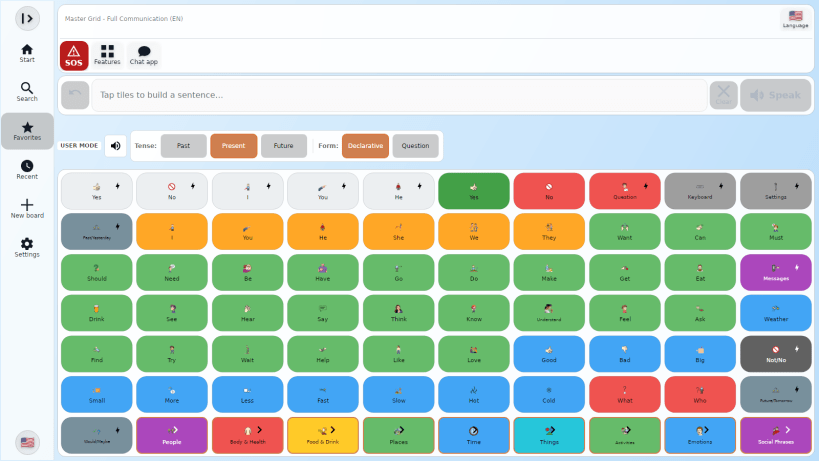
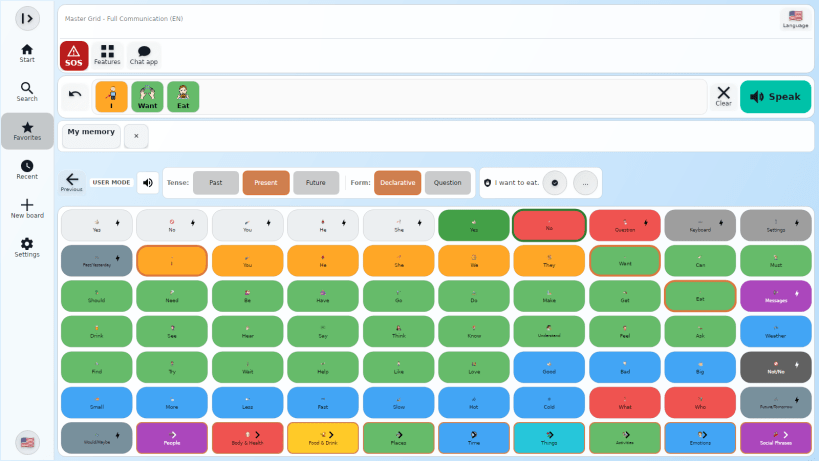
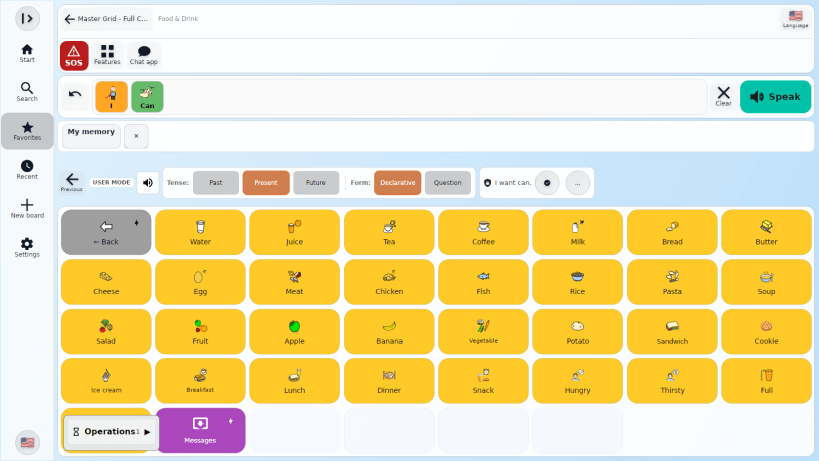
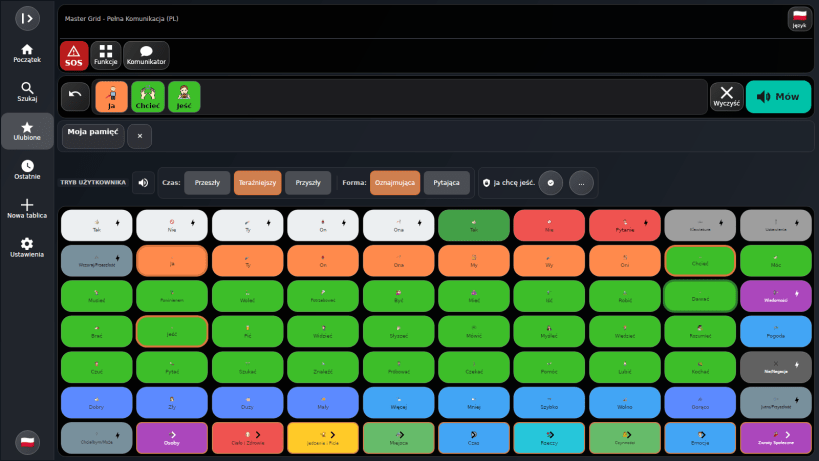
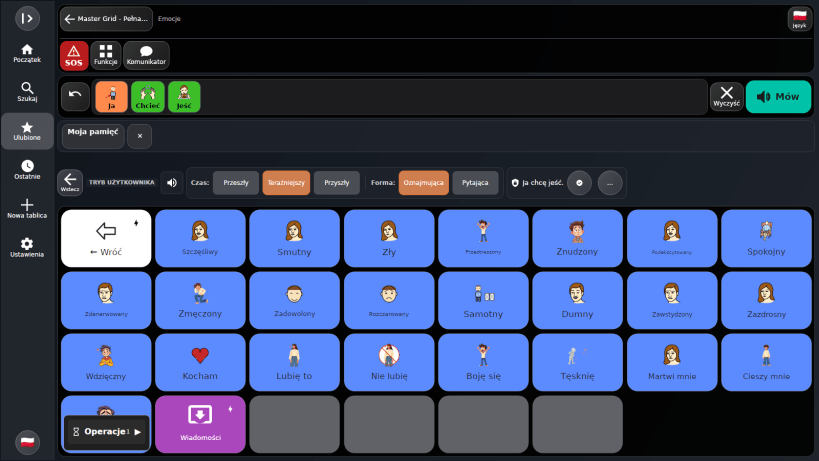
AbilityMic helps non-speaking people and people with communication difficulties express their thoughts, ask for help and take part in everyday conversations. Build a message with symbols or text, then speak it aloud — at home, at school or on the go.
Core augmentative and alternative communication (AAC) works offline, so an internet connection is not needed for everyday communication.
Build communication around the person
Turn selections into spoken messages
Optional AI support AI can help turn selected words into more natural sentences and assist with creating symbols and boards. The person communicating stays in control of the message and can review, change or reject suggestions. Core AAC does not require AI. Online AI requires an internet connection and consent; some optional services require a subscription.
Designed for accessible everyday use Large buttons, high contrast, adjustable text and keyboard navigation help adapt the experience to different access needs. Boards and vocabulary can be personalised with family members, communication partners and AAC professionals.
Privacy and control AbilityMic follows an offline-first approach, with local communication data stored on the device. There are no ads or tracking. Online services are optional.
AbilityMic is a communication and accessibility tool, not a medical device.
Learn more: https://www.abilitymic.com Support: https://www.abilitymic.com/support.php Privacy: https://www.abilitymic.com/privacy.php
You are about to open
Do you wish to proceed?
Thank you for your report. Information you provided will help us investigate further.
There was an error while sending your report. Please try again later.
Snaps are applications packaged with all their dependencies to run on all popular Linux distributions from a single build. They update automatically and roll back gracefully.
Snaps are discoverable and installable from the Snap Store, an app store with an audience of millions.
Snap can be installed from the command line on openSUSE Leap 15.x and Tumbleweed.
You need first add the snappy repository from the terminal. Choose the appropriate command depending on your installed openSUSE flavor.
Tumbleweed:
sudo zypper addrepo --refresh https://download.opensuse.org/repositories/system:/snappy/openSUSE_Tumbleweed snappy
Leap 15.x:
sudo zypper addrepo --refresh https://download.opensuse.org/repositories/system:/snappy/openSUSE_Leap_15.6 snappy
If needed, Swap out openSUSE_Leap_15. for, openSUSE_Leap_16.0 if you’re using a different version of openSUSE.
With the repository added, import its GPG key:
sudo zypper --gpg-auto-import-keys refresh
Finally, upgrade the package cache to include the new snappy repository:
sudo zypper dup --from snappy
Snap can now be installed with the following:
sudo zypper install snapd
You then need to either reboot, logout/login or source /etc/profile to have /snap/bin added to PATH.
Additionally, enable and start both the snapd and the snapd.apparmor services with the following commands:
sudo systemctl enable --now snapd
sudo systemctl enable --now snapd.apparmor
To install AbilityMic, simply use the following command:
sudo snap install abilitymic
Browse and find snaps from the convenience of your desktop using the snap store snap.

Interested to find out more about snaps? Want to publish your own application? Visit snapcraft.io now.